

Kin by Tayari Jones | book review
A guest review on kinship, care, and what it means to feel emotionally recognised on the page
This week brings a fresh guest post, this time a review of Kin by Tayari Jones. Chantel Grant writes from her perspective as a Black woman reading a novel that made her feel not just observed, but emotionally recognised by a book that is textured, warm, and humorous.
I’m personally drawn to books that teach me more about the world we live in. Sometimes they are people and experiences close to my own, but very often, they are about worlds I am less acquainted with. Chantel has inspired me to bump Kin up my (very long!) TBR, to which she suggests seven more books by Black women at the end of this guest post.
P.S. ICYMI, I published my book review of Alan Opts Out by Courtney Maum yesterday and will share my interview with the author soon, so watch this space!
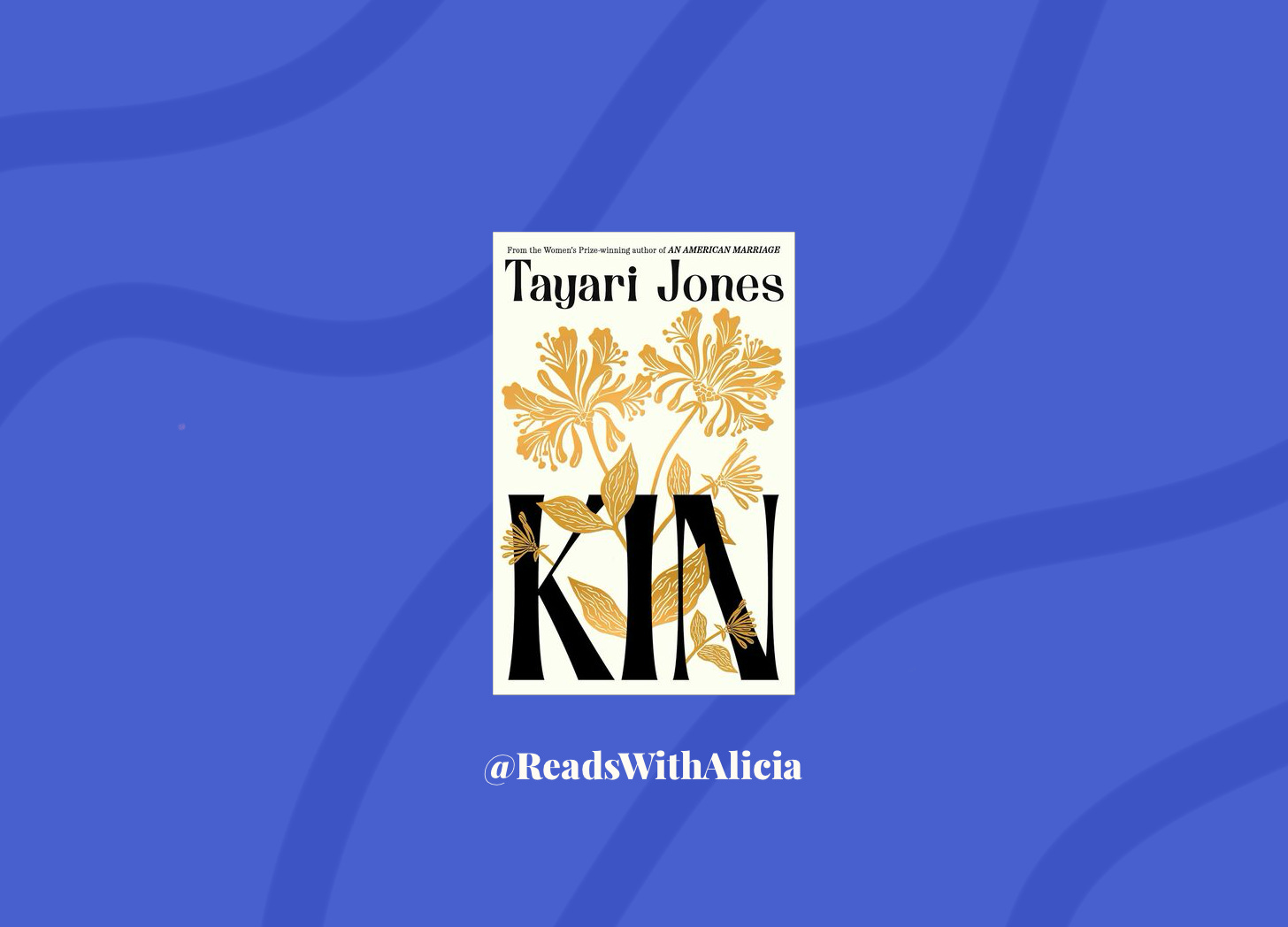
There are some books you finish. And then there are books that follow you into the kitchen while you wash dishes. Books that sit beside you while you drive. Books that keep unfolding long after you close the cover.
Kin was that kind of reading experience for me.
I am a Black woman. I share this detail because it shaped my entire reading experience. There were moments in this story that did not feel “observed” so much as recognized. Not because my life mirrors Annie’s or Vernice’s exactly (I wasn’t born and raised in the south, wasn’t motherless, and didn’t attend a Historically Black college or university), but because the emotional world of the novel felt culturally legible to me. I understood the silences, the negotiations, the aunties, the grandmothers, and the humor. Mostly, I was able to recognize the way love and survival arrive tangled together for many African Americans.
The novel is set in Louisiana during the 1950s and 1960s, but this is not one of those books that feels overly interested in performing history for the reader. The civil rights movement is there because it has to be there. It shapes the boundaries of people’s lives determining danger, movement, opportunity, and dignity. The novel’s real concern is intimacy, including what women inherit from one another, what they survive, what they withhold, and what they carry.
At the center of the story are Annie and Vernice, motherless crib sisters who grow up connected to one another while also moving through very different emotional landscapes. I appreciated how Jones never flattened either woman into a lesson. Thank goodness for that! Neither becomes the “good” woman or the “cautionary tale” woman. They are able to simply be women which means they are allowed to be contradictions. In other words, they feel like real people.
The alternating perspectives worked beautifully for me because the structure itself mirrors one of the novel’s central questions: can two people experience the same world and carry entirely different truths about it?
There is a passage from Vernice that stopped me cold:
I didn’t look at the people in the colored section because I didn’t want to shame them for staying seated and I didn’t look at the white folks because I didn’t want to shame myself.
Kin is filled with moments like this. The ability for the reader to see first hand the interior struggles, calculations and negotiations is such a privilege. And it’s those types of sentences that quietly open the character’s entire histories to us. This isn’t just true for Annie and Vernice. One of the things I enjoyed most was the way the other characters, especially the other female characters, were handled. They are all so textured, so human.
I kept thinking about how often Black women in literature become emotional infrastructure for everyone around them. And yet this novel allows those women complexity, too. Some nurture. Some wound. Some take. Some give. Some do all of those things at once.
The heartbeat of the novel is wrapped up in one line:
You gave me the care that people save for kin.
Because Kin isn’t asking what makes a family, but rather acknowledging the legacy of enslaved and marginalized people having to be good at making family. Reading it made me sit with the consequences of cultural motherlessness and think about what happens to a people when lineage is interrupted, and recovery becomes partial and improvised. Although the novel never states this directly, it creates space for those questions to emerge naturally.
That, to me, is the mark of a strong literary novel. Not that it tells you what to think, but that it enlarges your thinking.
Maybe what stayed with me most is that Kin never rushes to answer its own questions. It trusts the reader enough to sit in uncertainty, contradiction, tenderness, and grief without tying everything into a neat bow. Long after I finished the novel, I found myself returning not just to particular scenes, but to the larger questions humming underneath them. Questions about redemption and whether care can undo harm. About grace and who gets extended softness in a hard world. About sisterhood, survival, and what it means to belong to people who may not always know how to love you well. And we can’t forget about the questions around race and the invisible emotional negotiations Black people carry every day just to try to move through the world intact.
And despite all of this emotional and historical weight, the book never loses its warmth. There is humor here. Gossip. Texture. Joy. The feeling of women talking in kitchens and on porches. The tenderness and passion between a man and a woman. There are scenes that feel so authentic to me as a Black woman; they feel like home.
And honestly, I think one of the best compliments I can give a book is this: it made me want to keep reading around it. Not because it was incomplete, but because it opened a door. Certain novels expand your literary appetite and sharpen your curiosity for more stories that wrestle with similar emotional terrain.
So if Kin moves you after reading it, here are a few more novels by Black women I would place gently into your hands:
Silver Sparrow by Tayari Jones. An emotionally sharp novel about sisters, secrecy, and the fragile architecture of family.
The Love Songs of W.E.B. Du Bois by Honorée Fanonne Jeffers. A sweeping story about ancestry, inherited memory, and what it means to carry generations inside yourself.
Sula by Toni Morrison. One of the most powerful explorations of female friendship, difference, and intimacy ever written.
Salvage the Bones by Jesmyn Ward. A raw and beautiful Southern novel about family, survival, and tenderness under pressure.
Mama Day by Gloria Naylor. A lyrical story where ancestry, folklore, and Black womanhood feel deeply alive on the page.
The Women of Brewster Place by Gloria Naylor. Interconnected stories of women building community, resilience, and care in difficult circumstances.
Their Eyes Were Watching God by Zora Neale Hurston. A timeless novel about voice, freedom, love, and a woman becoming fully herself.
I think Kin is the kind of novel that reminds us that literature does not always need spectacle to be powerful. Sometimes a book changes you quietly through observation, recognition, and the simple but difficult act of making people fully human on the page.
Have you read Kin or any books that made you feel not just observed, but seen? Chat with us in the comments!
Great review, Chantel, and thank you Alicia, for bringing it to print!
What a beautiful write up, thank you Chantel and also Alicia for bringing us this.
I love the notion of a book being culturally legible, that is such great phrasing for when your reading experience is enhanced by lived experience. But equally based on your description, this seems like a stellar example of a book that can transport and educate you on experiences that don’t necessarily mirror your own.
Hearing that this is woven with gossip and humour and not weighed down on history is a relief for me. I’ve been interested in giving this a book a go but often struggle with historical fiction where that aspect is at the forefront.
Again, thank you for the care and detail in this post. I can’t underscore enough how beautiful the writeup was. A joy to read!